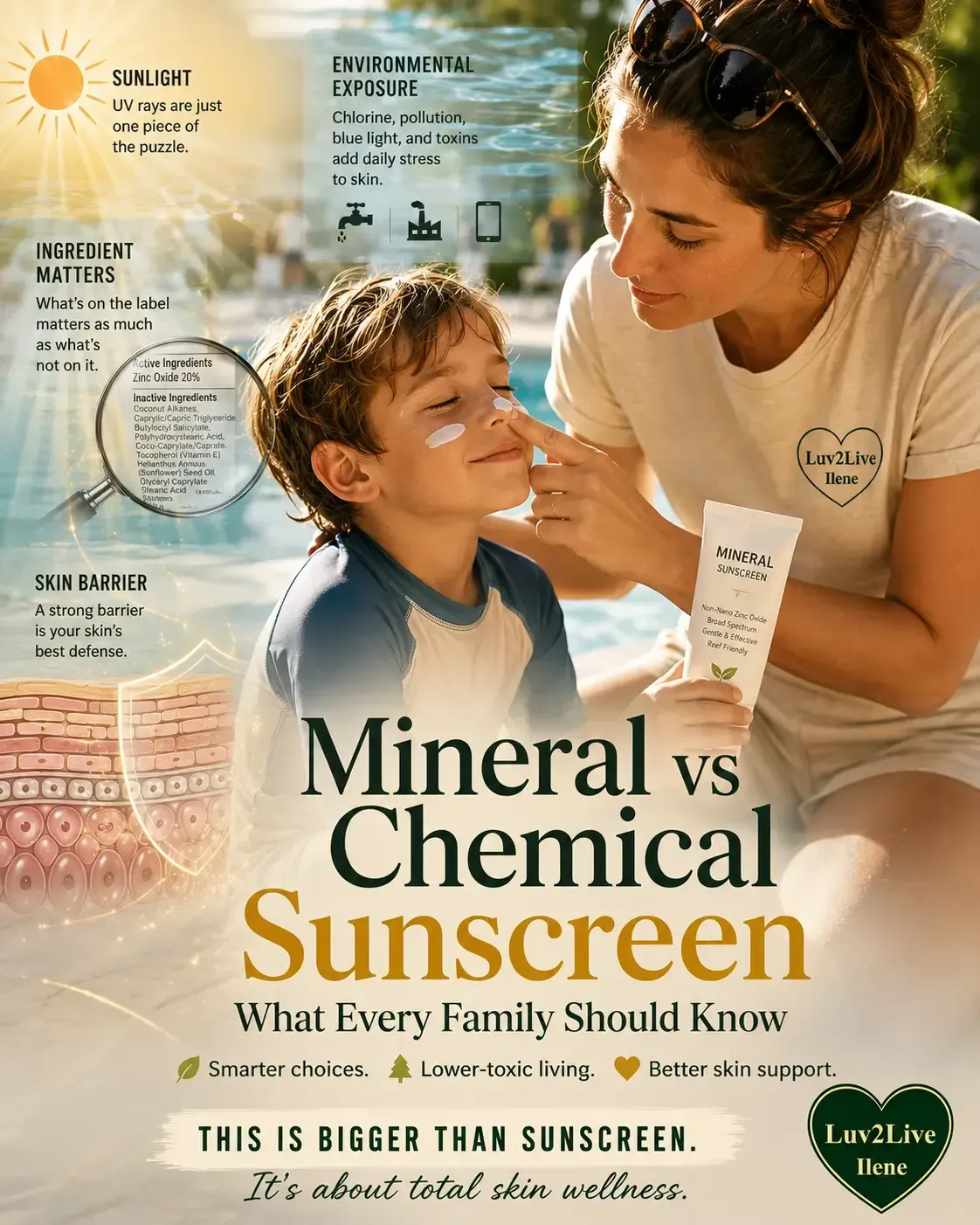
Mineral vs Chemical Sunscreen
Sun Care & Skin Health
Mineral vs Chemical
Sunscreen
What Every Family Should Know
Summer is here — which means sunscreen season is officially back. But between the beach bags, pool parties, and family vacations, a bigger question is emerging:what exactly are we putting on our skin every single day?
Luv2Live Ilene·Wellness & Skin Health·10 min read
People Are Now Asking
? What sunscreen ingredients are safest for kids?
? What's the difference between mineral vs chemical sunscreen?
? Does sunscreen absorb into your skin?
? What happens when sunscreen washes into pools and lakes?
? What's the best sunscreen for sensitive skin?
? Can you support your skin while still enjoying the sun?
Those are smart questions. This conversation deserves more nuance than "all sunscreen is bad" or "the sun is dangerous."
Why This Conversation Matters More Than Ever
Most families apply sunscreen with good intentions. We want to protect our children, our skin, our health, and our future. But modern sunscreen products vary dramatically in ingredients, formulation, environmental impact, and how they interact with the body.
Some are aerosol sprays. Some contain chemical UV filters. Some rely on mineral barriers. Some include fragrances, preservatives, and stabilizers. And many consumers have never actually looked at the ingredient label.
That's changing — especially as more people begin learning about skin barrier health, oxidative stress, environmental stressors, hydration, and lower-toxic lifestyle choices.
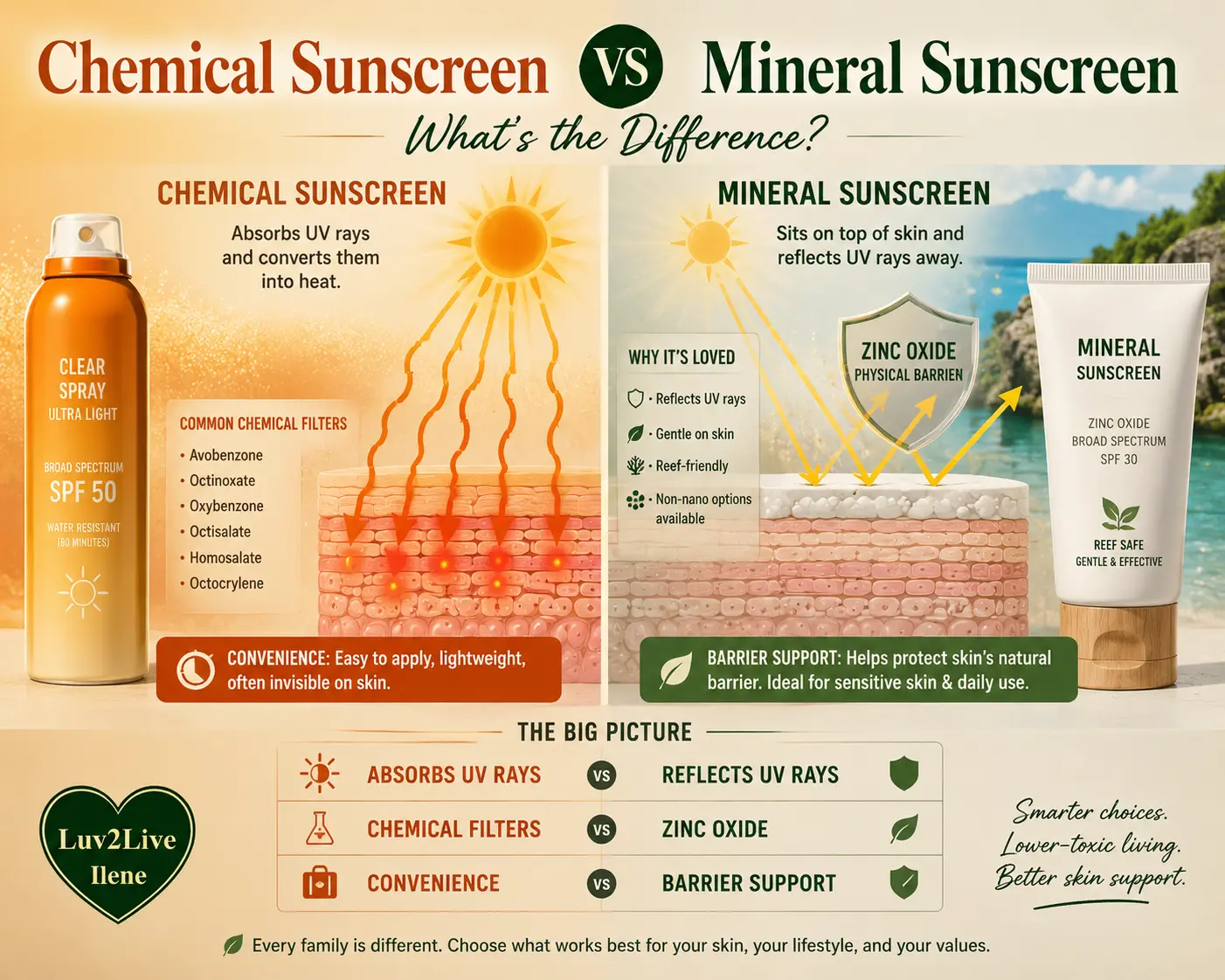
Mineral vs Chemical Sunscreen: What's the Difference?
This is one of the biggest questions right now — and for good reason.
Chemical Sunscreens
Chemical sunscreens use ingredients that absorb UV radiation. These ingredients absorb UV rays, convert them into heat, and release that heat from the skin. They're often lightweight, invisible, and easy to spread — common in sprays and aerosols.
But they've also raised questions around skin irritation, environmental impact, reef safety, and ingredient absorption. Some studies have shown detectable levels of certain sunscreen chemicals in blood plasma after repeated use, which has led many consumers to start researching ingredient choices more carefully.
If skin is our largest organ… should ingredient quality matter more than most people realize?
Mineral Sunscreens
Mineral sunscreens work differently. Instead of absorbing UV rays chemically, they create a physical barrier on the skin's surface that helps reflect and scatter UV radiation. Zinc oxide is especially popular because it offers broad-spectrum UVA and UVB protection.
Many families prefer mineral sunscreens because they are often gentler on sensitive skin, reef-friendlier, fragrance free, and less irritating — especially for children and babies.
One challenge? Older mineral sunscreens often left a thick white cast or greasy feel. Newer formulations have improved significantly. For example, Mineral Sunsticks using zinc oxide as the active ingredient while also including moisturizing ingredients like jojoba oil and shea butter — formulated to go on sheer without the heavy white appearance.
Try a Mineral Sunstick
TrueScience TrueProtect Daily Mineral Sunstick — zinc oxide active, jojoba oil, shea butter. Broad-spectrum protection that goes on sheer. This is what I use.
The Skin Barrier Conversation Most People Aren't Having
Here's the part many sunscreen discussions miss entirely: your skin is not just a surface. It's a living barrier system. And modern skin is dealing with more environmental stress than ever before.
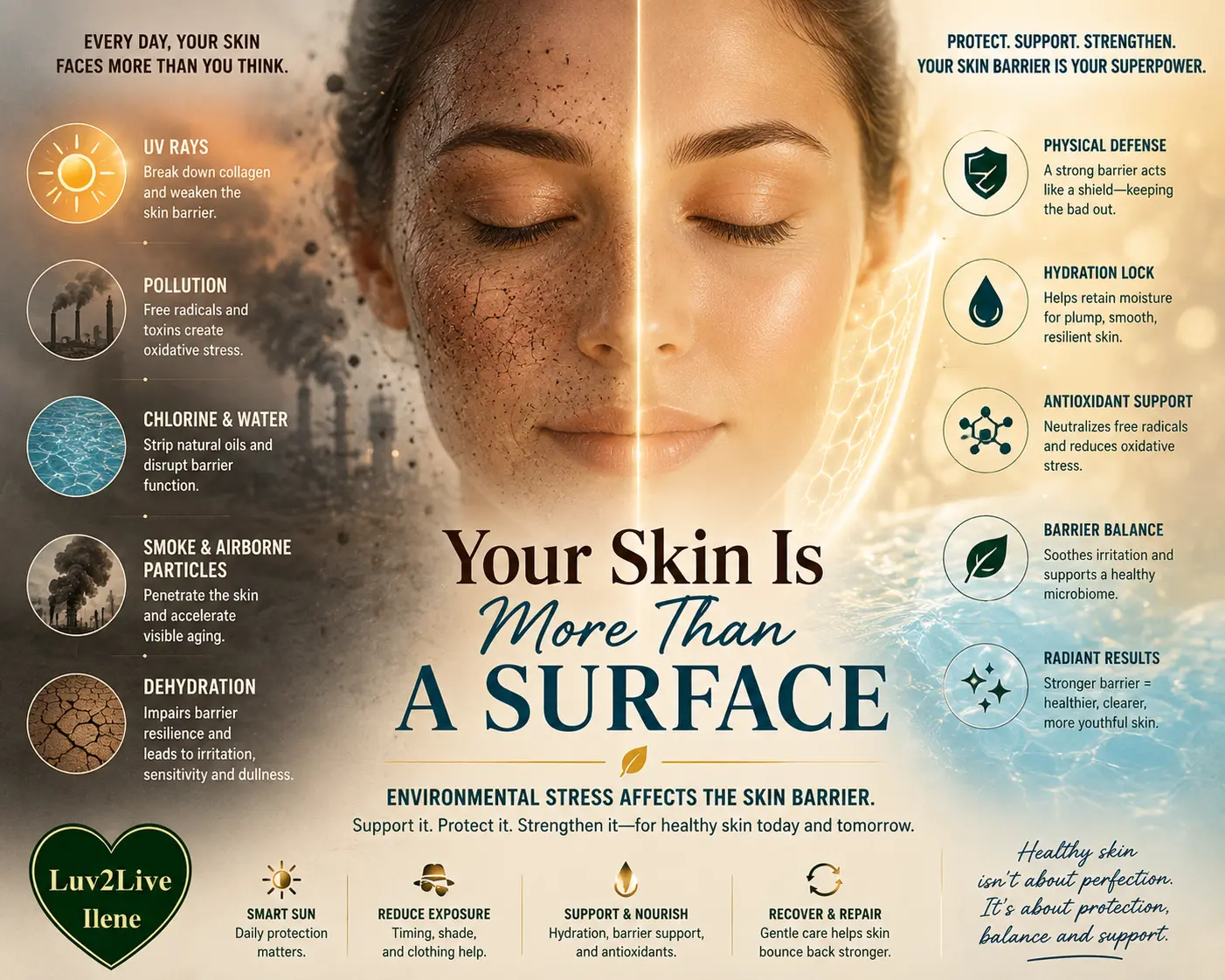
The TrueScience® skin-care line focuses heavily on hydration and oxidative stress support concepts using ingredients like green tea, turmeric, milk thistle, bacopa, and antioxidant blends. Their educational materials specifically discuss environmental aggressors and oxidative stress impacting visible skin appearance and hydration.
That doesn't mean fear the outdoors. It means support the skin intelligently.
What About Kids and Sensitive Skin?
Parents today are paying closer attention than ever — especially families navigating eczema, sensitive skin, sensory sensitivities, ingredient reactions, fragrance sensitivities, and lower-toxic lifestyle choices.
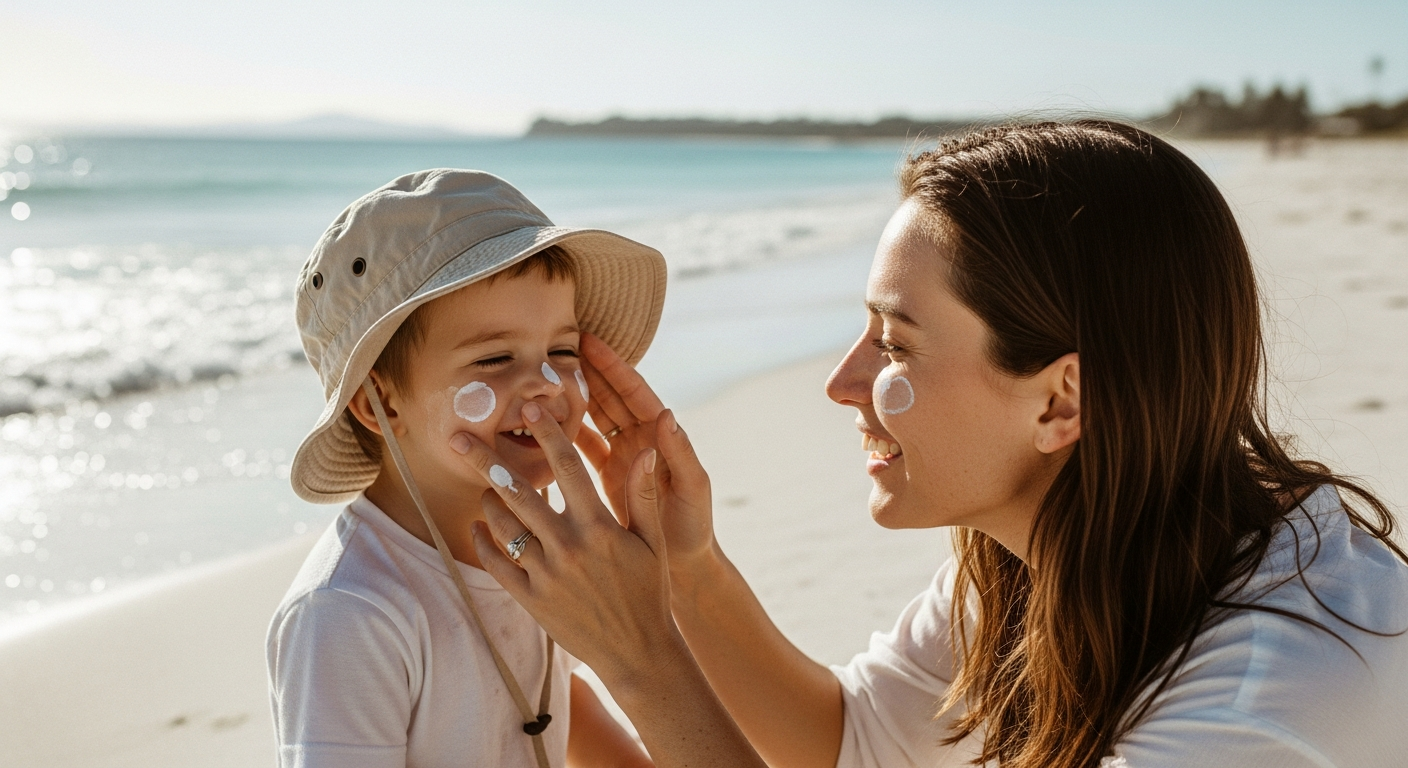
Children's skin is thinner and often more reactive than adult skin. Many parents are now choosing:
Fragrance-free products
Mineral sunscreens
Lower-toxic personal care
Reef-friendly options
Simpler ingredient labels
Not because they're paranoid. Because they're informed.
The Pool Question Nobody Thinks About
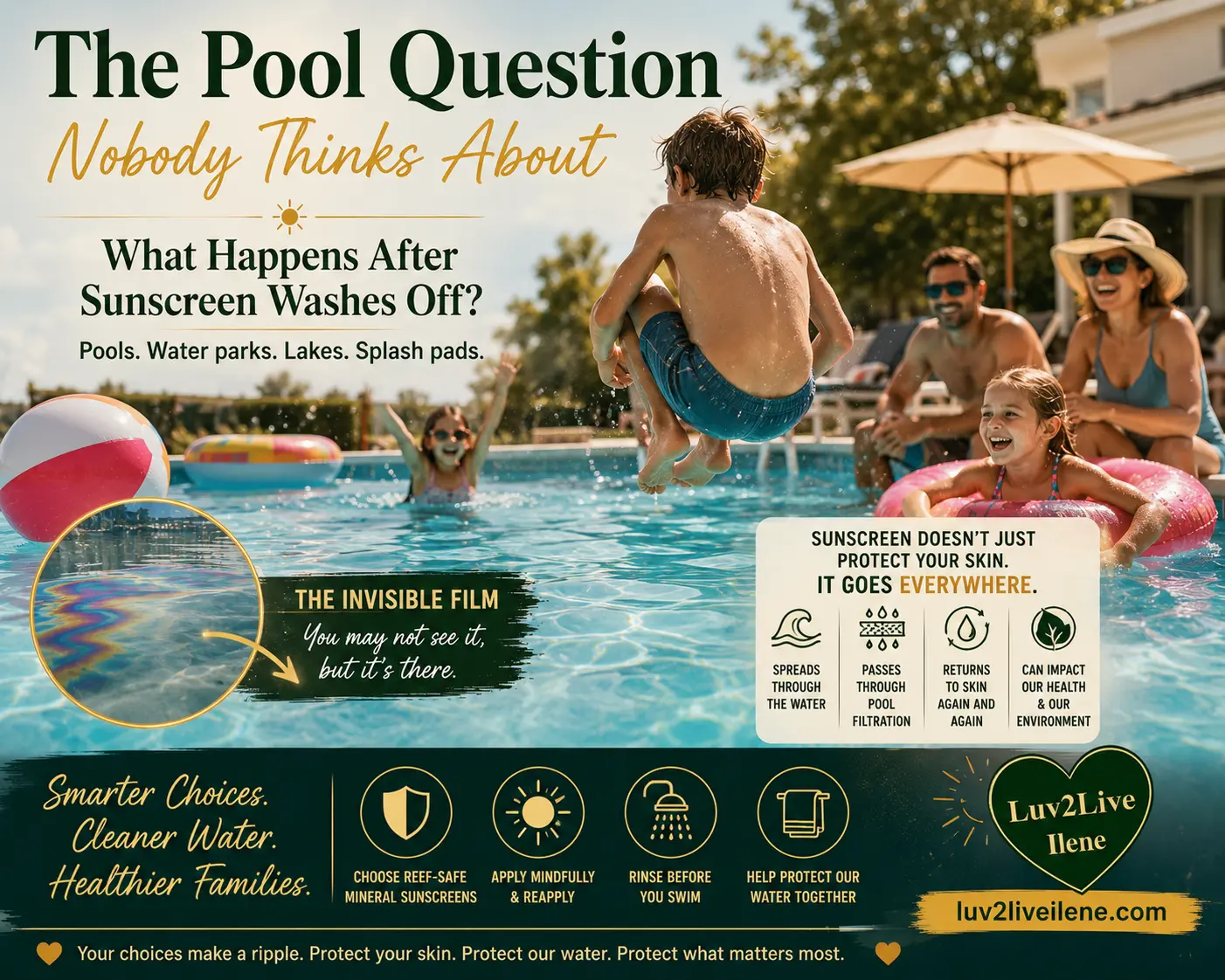
Here's an interesting thought most people never stop to consider: where does sunscreen go after swimming?
Especially at pools, water parks, lakes, and splash pads — some sunscreen washes off, some mixes with chlorine, some enters filtration systems, and some remains on skin. Some may accidentally be swallowed in water.
Again — this isn't about panic. It's about awareness. Because once people start asking "what happens after application?" they usually begin making more intentional choices.
Does This Mean the Sun Is Bad?
No. That's where many conversations become extreme.
The sun plays important roles in circadian rhythm, mood, vitamin D production, outdoor movement, and overall wellness.
Not the goal
Fear the sun
The actual goal
Balanced sun habits
The goal is smart exposure, hydration, shade when needed, supportive skin care, and paying attention to your body. There's a massive difference between mindful exposure and burning irresponsibly for hours.
A Smarter Way to Think About Skin Support
One of the biggest "aha moments" for many people is realizing: protection and repair are not the same thing.
Sunscreen may help reduce UV exposure. But skin still deals with environmental stress, oxidative stress, dehydration, heat, pollution, and irritation. That's why many wellness-focused consumers are also paying attention to hydration support, barrier support, antioxidant-rich skin care, and ingredient quality.
Questions Worth Asking Before Buying Sunscreen
Instead of asking "What's the strongest SPF?" — maybe start asking:
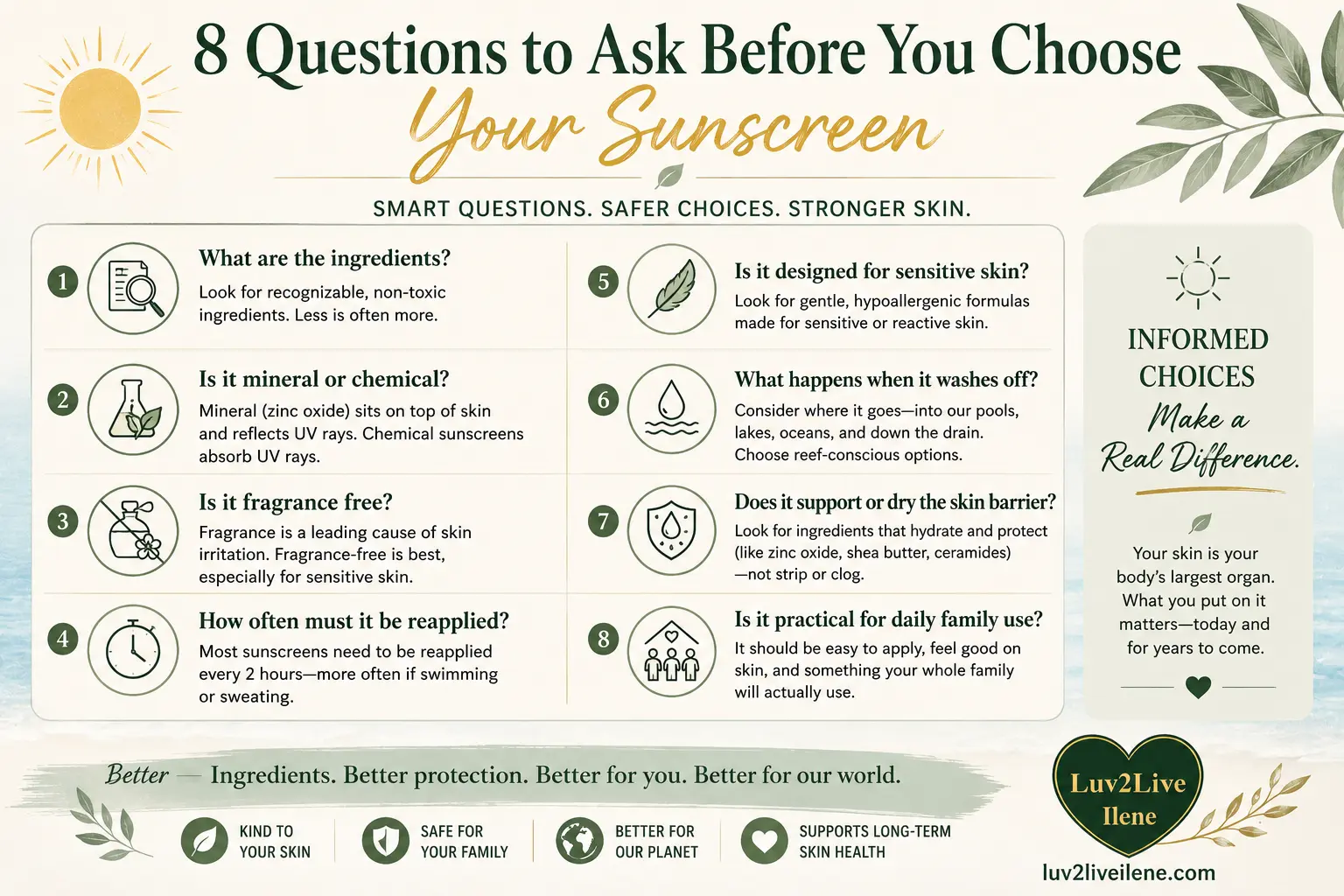
You don't have to become obsessive to become more aware. Sometimes healthier living starts with one simple moment: reading the label. Asking better questions. Choosing more supportive options where you can. And realizing that skin health is about far more than appearance — it's about the environment your body interacts with every single day.
💛 You're Not Broken — You're Blocked.
And when you remove the blocks, you can Luv2Live your best life.
In This Article
Why This Conversation MattersMineral vs Chemical SunscreenThe Skin Barrier ConversationKids & Sensitive SkinThe Pool QuestionDoes This Mean the Sun Is Bad?A Smarter Way to Think About SkinQuestions Worth Asking
Related Reading
Free Resource
Mineral vs Chemical Sunscreen Guide
Download the complete guide to making informed choices for your family.
TrueProtect Mineral Sunstick
Zinc oxide broad-spectrum, sheer finish, jojoba oil + shea butter.
Ready to Explore More?
Live Your Best Life
Join the community at Luv2Live Ilene for wellness insights, skin health education, and personalized support.
Read More Articles Explore Services
Luv2Live Ilene
Wellness · Skin Health · Intentional Living