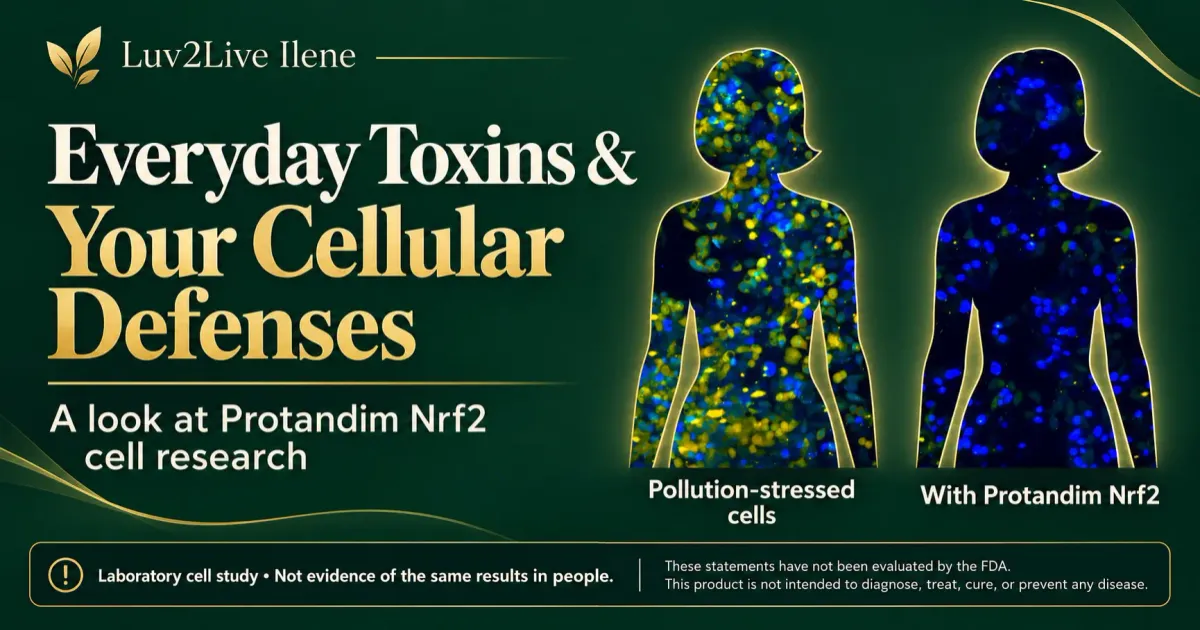
Everyday Toxins & Your Cellular Defenses: A Look at Protandim Nrf2 Research
_______________________________________________________________________________________
Protect yourself against the impact of environmental toxins. Take the Quiz Here
_______________________________________________________________________________________
Modern Life, Cellular Stress, and Protandim Nrf2: What new Research Shows
Pollution. Microplastics. Pesticides. We hear about them everywhere.
But what happens when researchers look at their effects on cells—and introduce Protandim NRF2 Synergizer?
You can choose your groceries, filter your water, and pay attention to what comes into your home. But you still have to live in the world.
And sometimes that world comes with a little more baggage than we ordered.
So rather than trying to make every corner of life perfect, I’m interested in a practical question:
A new LifeVantage-sponsored laboratory study explores part of that question. Researchers examined how cells responded to five environmental and dietary stressors, and how the oxidative-stress signal changed with Protandim NRF2 Synergizer.
Let’s walk through what they tested, what the images show, and what the findings mean.
First, What Is Oxidative Stress?
Our cells naturally produce reactive oxygen species, often abbreviated as ROS, during everyday activity. Our antioxidant defenses help keep them in balance.
Oxidative stress happens when ROS production exceeds those defenses.
Think of a busy kitchen. Cooking creates dishes, crumbs, and spills. That’s normal. The problem begins when the mess builds faster than the cleanup crew can handle it.
Inside cells, that imbalance can affect components such as proteins, fats, and DNA.
NRF2 is involved in switching on genes that help cells manage oxidative stress. Protandim NRF2 Synergizer was developed to activate that pathway, increasing the production of the body’s own antioxidant enzymes.*
What Did the Researchers Study?
This was an in vitro study, meaning it took place in laboratory cell cultures.
Researchers used three cell types to model aspects of different tissues:
HepG2 cells: aspects of liver metabolism and the processing of foreign substances.
Dermal fibroblasts: responses of skin and connective tissue cells.
Caco-2 cells: aspects of the intestinal lining.
They evaluated cell viability and oxidative-stress activity after exposure to five stressors, with and without Protandim NRF2 Synergizer.
The five categories were pollution, pesticides, hormone disruptors, plastic particles, and a compound used to represent one aspect of food-related stress.
How to Read the Research Images
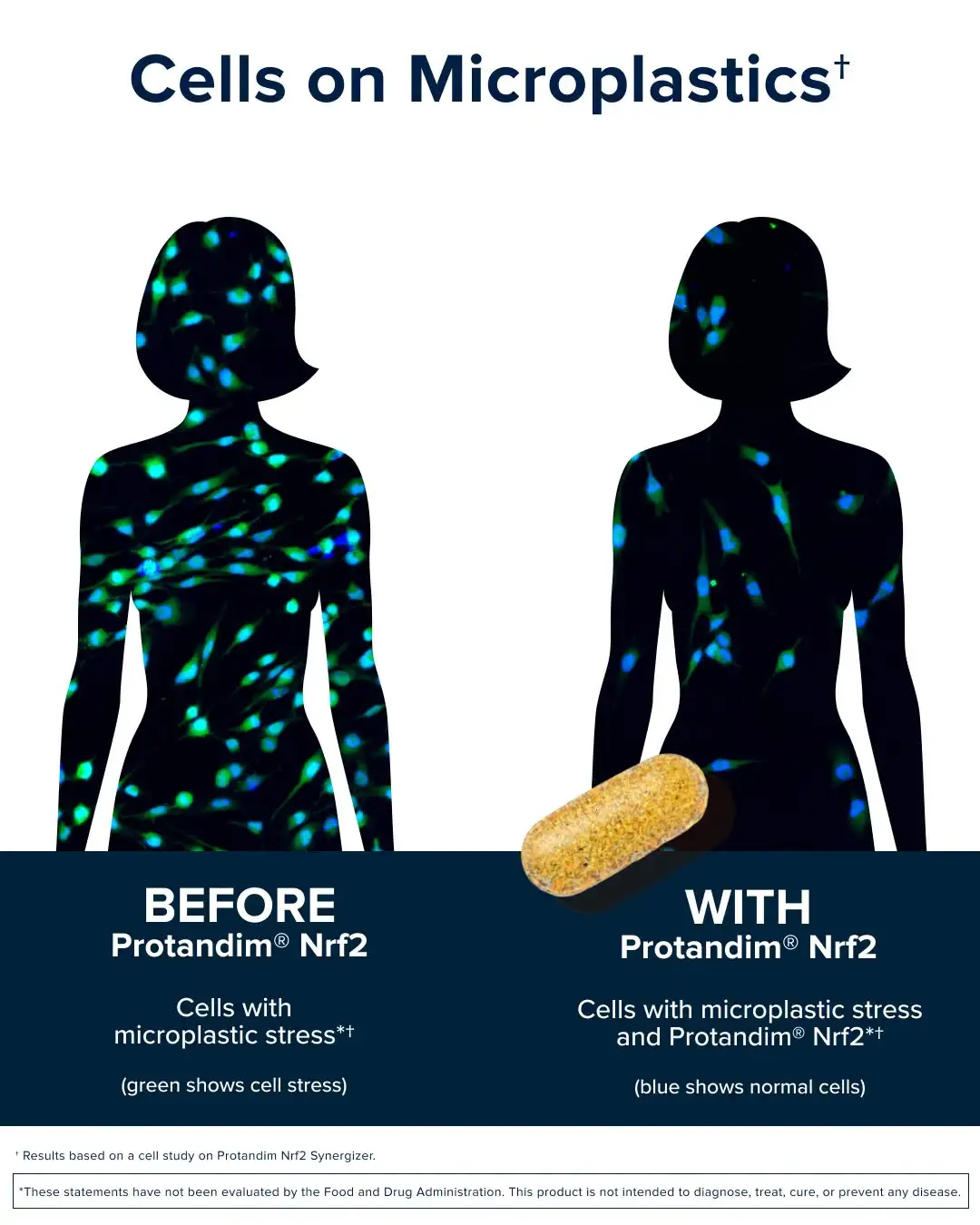
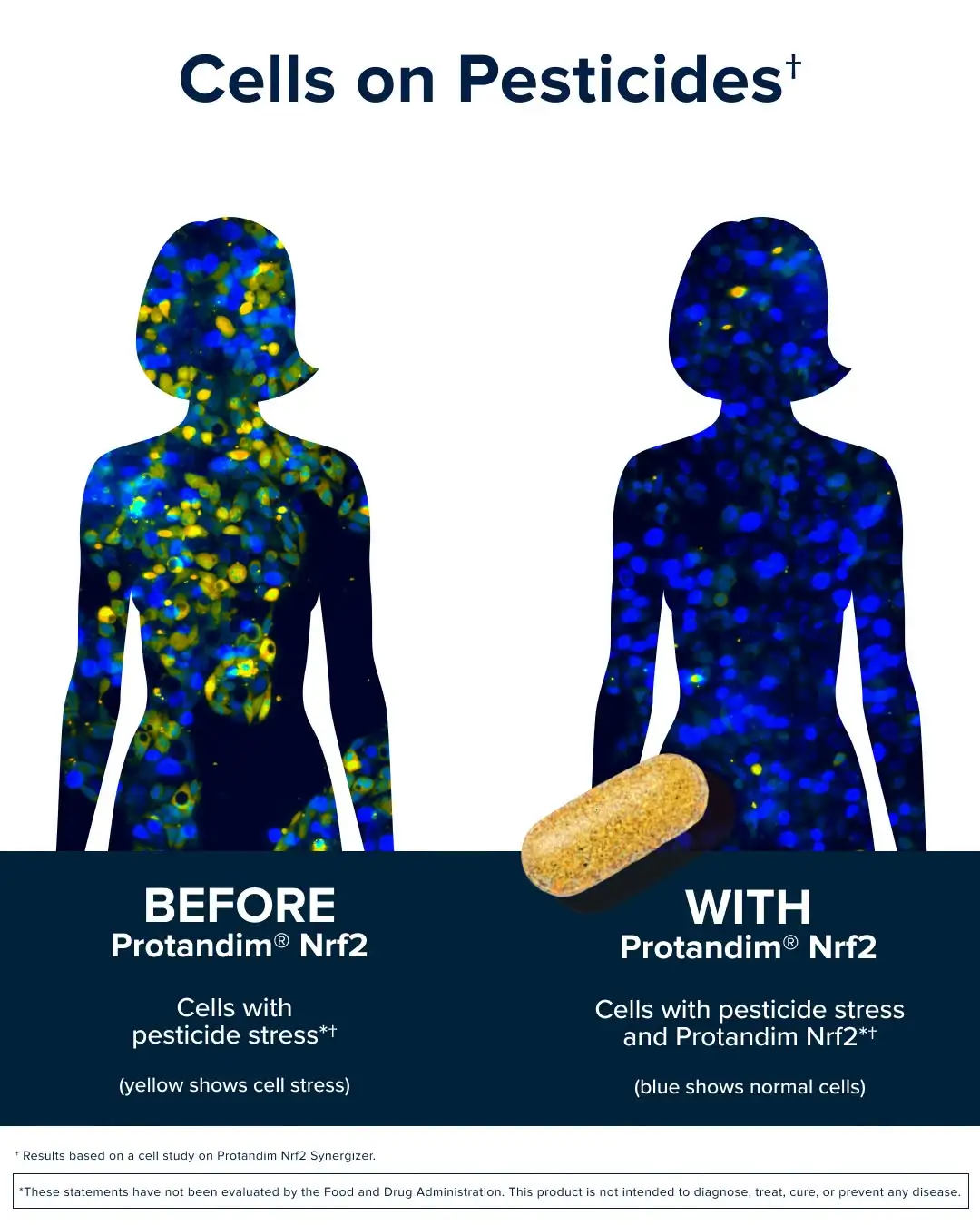
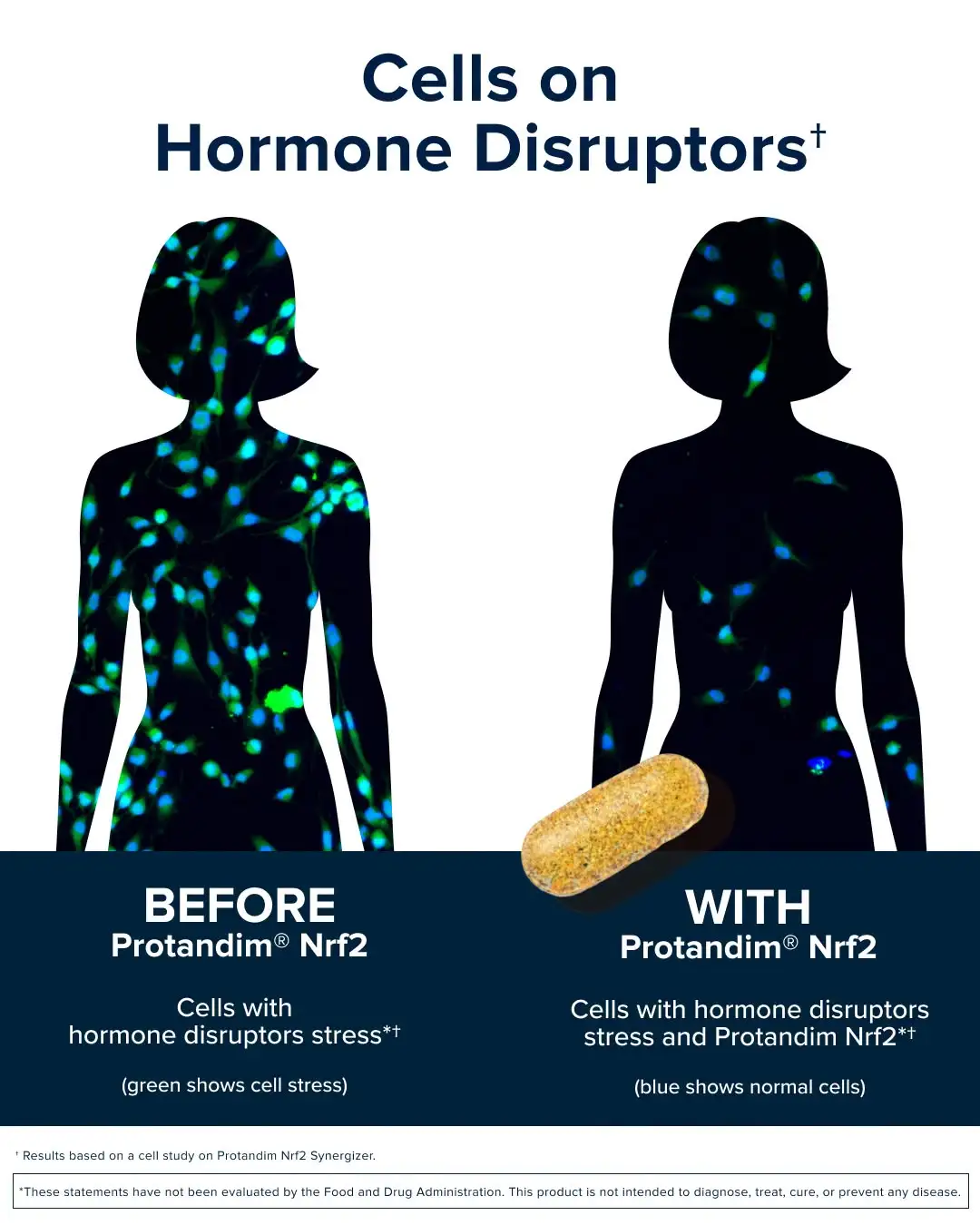
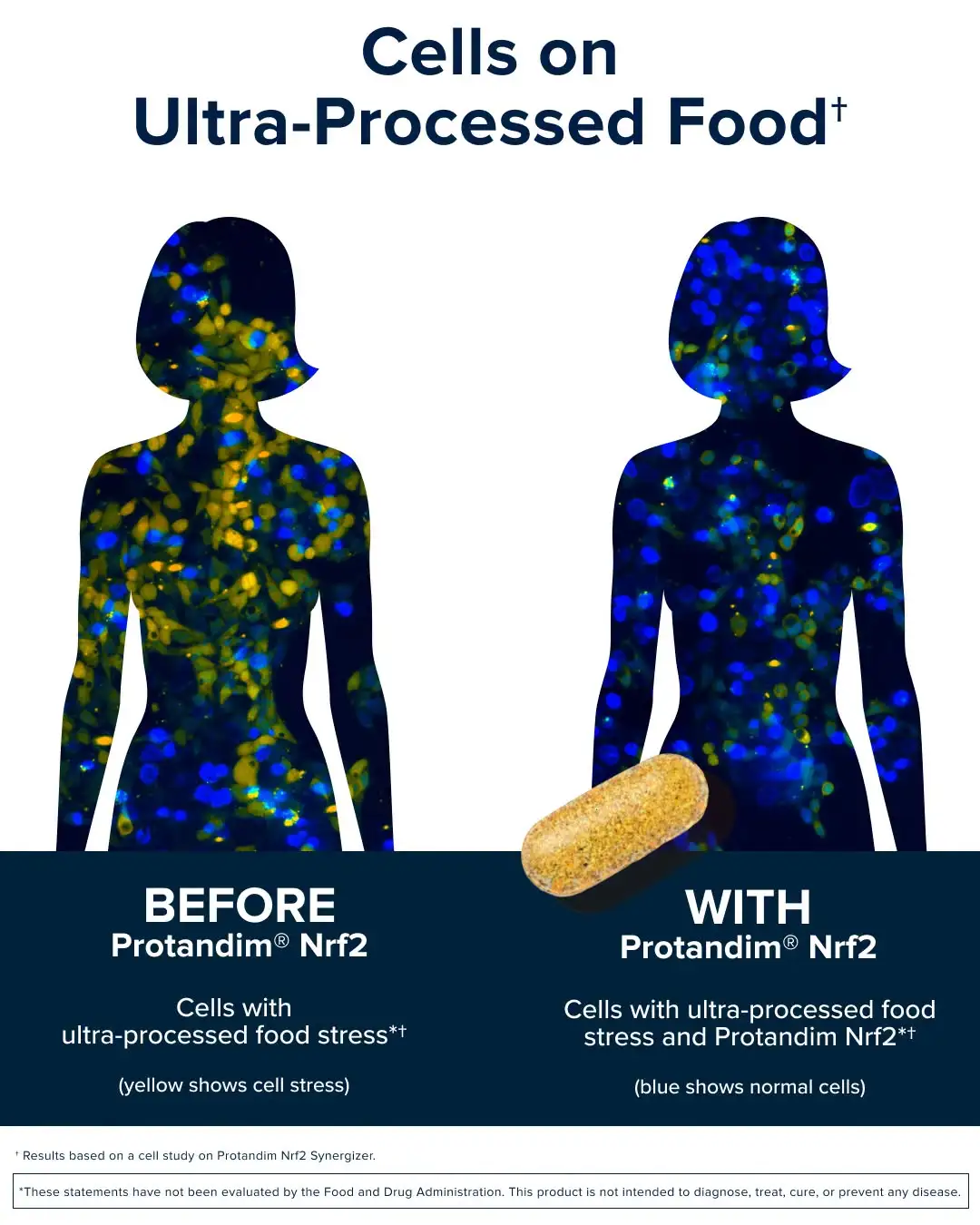
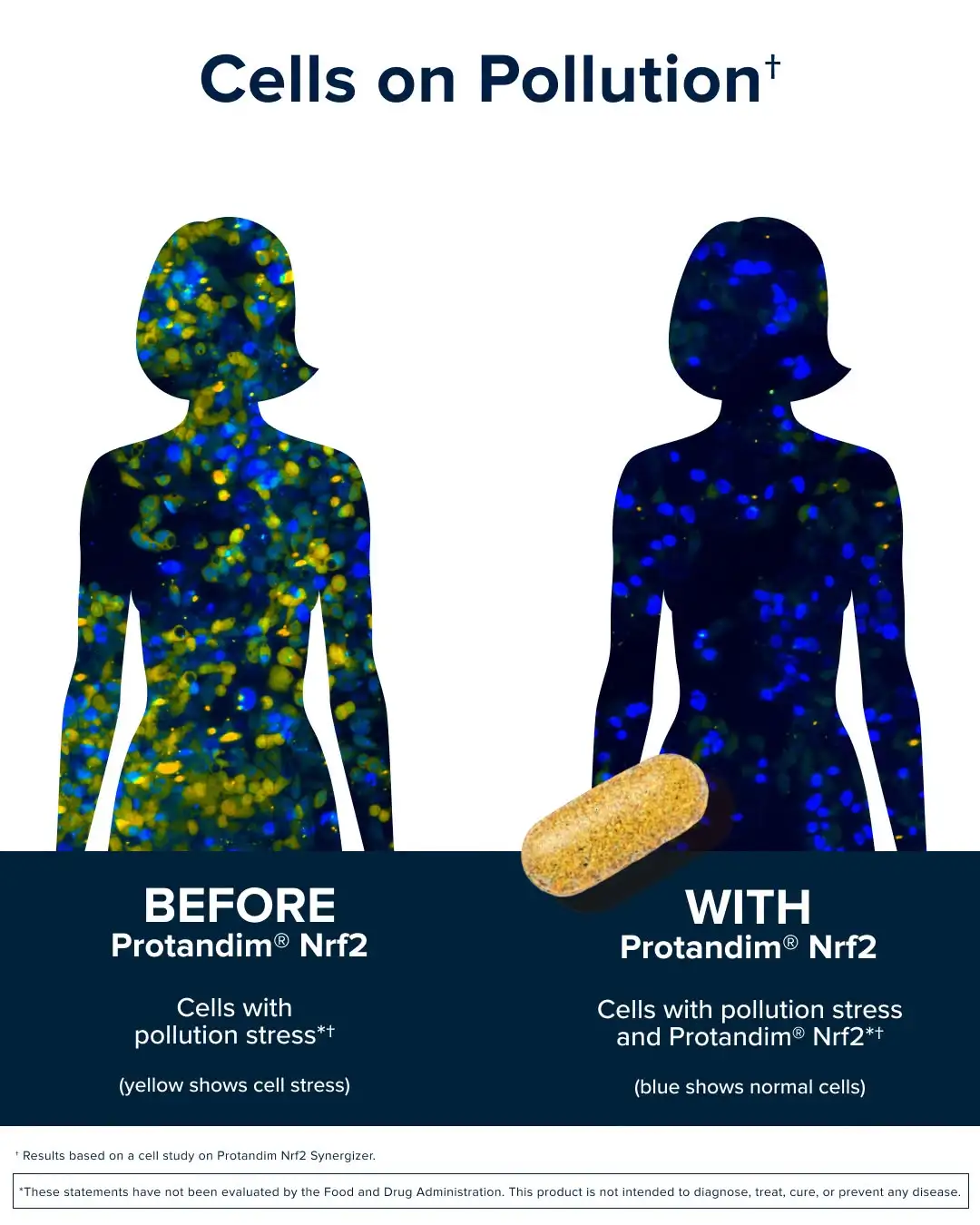
Each comparison shows cells exposed to a stressor (left) and cells exposed to the stressor with Protandim NRF2 Synergizer (right).
Blue marks cell nuclei. Yellow or green fluorescence, depending on the test, indicates a signal associated with oxidative stress. Each graphic is labeled with its own color key.
The report describes a reduction in that fluorescence with the addition of Protandim NRF2 Synergizer compared with stressed cells without it.*
The colors are laboratory measurements. They are not pictures of toxins being removed.
1. Pollution: What Happens at the Cellular Level?
Pollution can feel like something happening “out there.” This study brought a specific sample into the laboratory: fine atmospheric particulate matter.
Researchers examined how cells responded to that exposure. The report describes increased oxidative-stress fluorescence in stressed cells and less fluorescence with the addition of Protandim NRF2 Synergizer.*
2. Microplastics: A Closer Look at Plastic Particles
For the plastic-particle portion of the study, researchers used a specific laboratory material: polystyrene nanoparticles measuring 100 nanometers.
That detail matters because “microplastics” is a broad category. This experiment tested one defined particle type and size.
The report describes a lower oxidative-stress signal in treated cell cultures compared with stressed cultures without Protandim NRF2 Synergizer.*
3. Ultra-Processed Foods: Studying One Part of a Bigger Picture
Researchers did not put an entire fast-food meal into a cell culture.
They used methylglyoxal, a compound selected to represent one aspect of food-related stress.
The report describes reduced oxidative-stress fluorescence with the addition of Protandim NRF2 Synergizer compared with stressed cells without it.*
4. Hormone Disruptors: Examining a Specific Phthalate
For this category, researchers used DEHP, a member of the phthalate family.
The experiment measured cell viability and oxidative-stress activity. The report describes less oxidative-stress fluorescence in the presence of Protandim NRF2 Synergizer.*
5. Pesticides: The Glyphosate Comparison
Researchers used pure glyphosate for the pesticide portion of the study.
As with the other comparisons, they examined the cellular response to the stressor and the response with Protandim NRF2 Synergizer.
The report describes reduced oxidative-stress fluorescence in treated cell cultures compared with stressed cultures without it.*
What Was the Overall Finding?
The report describes reductions in the oxidative-stress signal across multiple cell types and stressor conditions after the addition of Protandim NRF2 Synergizer.*
Researchers also performed further measurements of ROS intensity in the liver-model cells and fibroblasts. The report describes the strongest responses in the liver-model cells.
These results provide a closer look at cellular activity. This particular experiment did not establish that taking a caplet prevents health problems from these exposures, removes toxins from the body, or makes an exposure harmless.
Where Does Activation Fit?
What interests me about activation is the focus on the body’s own systems.
Rather than thinking only about adding more antioxidants, NRF2 activation involves signaling pathways that increase the production of antioxidant enzymes.*
Back to our kitchen: it’s a little like calling in the cleanup crew.
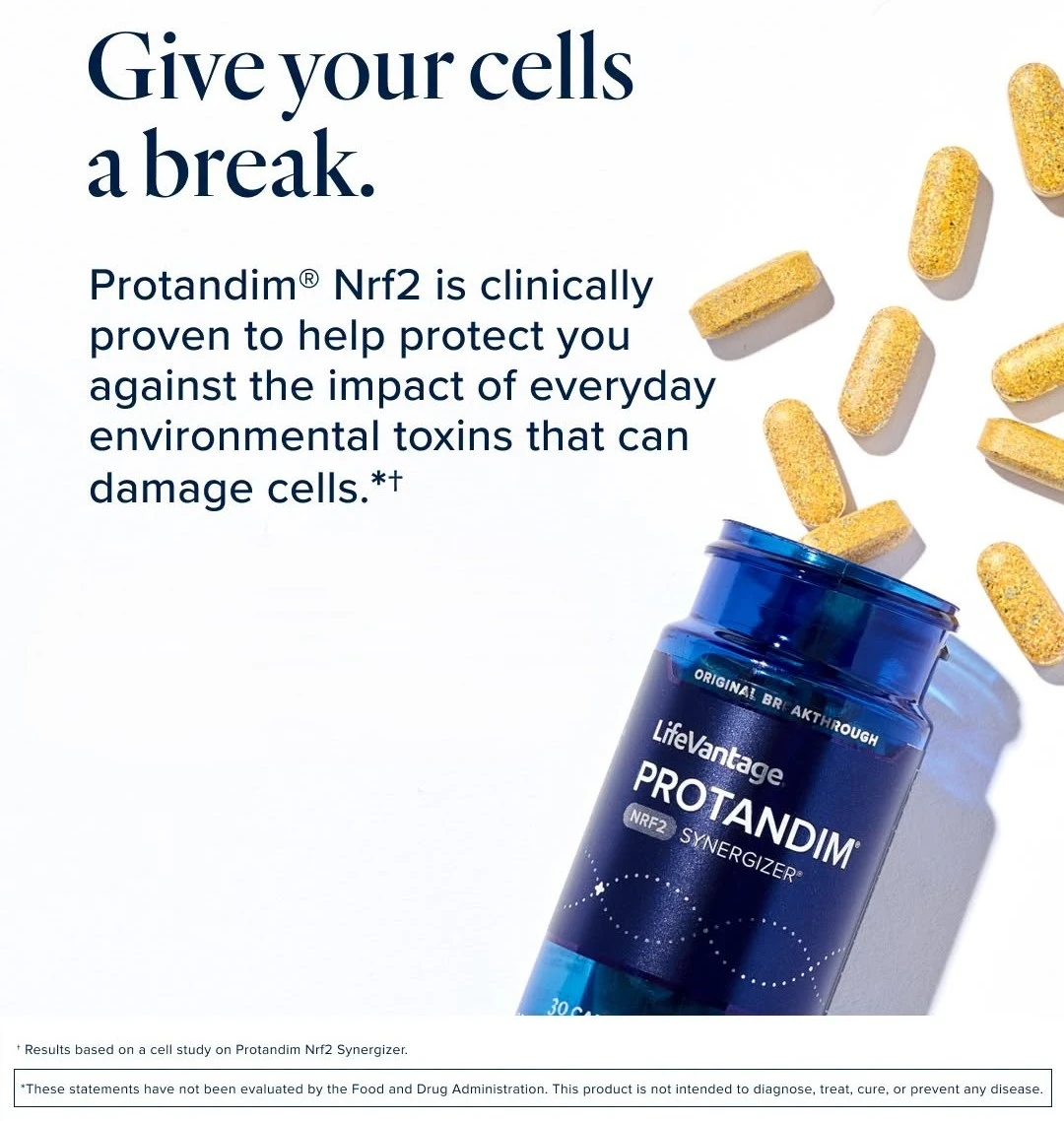
LifeVantage describes Protandim NRF2 Synergizer as a once-daily caplet that activates the body’s natural antioxidant defenses.* Follow the product label for directions.
A routine can be simple while still being intentional: thoughtful food choices, attention to avoidable exposures, and an understanding of the products you choose.
Why This Research Interests Me
I’ve included Protandim NRF2 in my own routine since November 2014.
My personal experience is one part of my story. Research gives us another way to explore what is happening at the cellular level.
What draws me to this study is the question behind it: How do cells respond when everyday stressors challenge them, and what changes when NRF2 activation is introduced?
We don’t have to turn wellness into a full-time job. But we can ask better questions and make informed choices, one step at a time.
Read the Research
LifeVantage Corporation. In vitro evaluation of Protandim® Nrf2 Synergizer® and its effect on oxidative stress activity after exposure of cells to 5 environmental toxins. Sponsor: LifeVantage Corporation. Report code: 260601.03 EN.