
Cellular Health and Skin
Skin Education
The Missing Conversation About Skin at the Cellular Level
Most sunscreen conversations stop at one question: "Will this prevent a sunburn?" But what if the real discussion should go much deeper — all the way to the cellular level?
What If Skin Care Wasn't Just About the Surface?
Most sunscreen conversations stop at one question: "Will this prevent a sunburn?"
But what if that's only part of the conversation?
What if the real discussion should also include:
oxidative stress in the skin
environmental stress on skin cells
skin barrier support
pollution exposure
chlorine exposure
blue light exposure
hydration
free radical damage
how modern life may be impacting skin long before wrinkles ever appear
Your skin is not just a covering. It's a living, active organ constantly interacting with the world around you. And most people were never taught that.
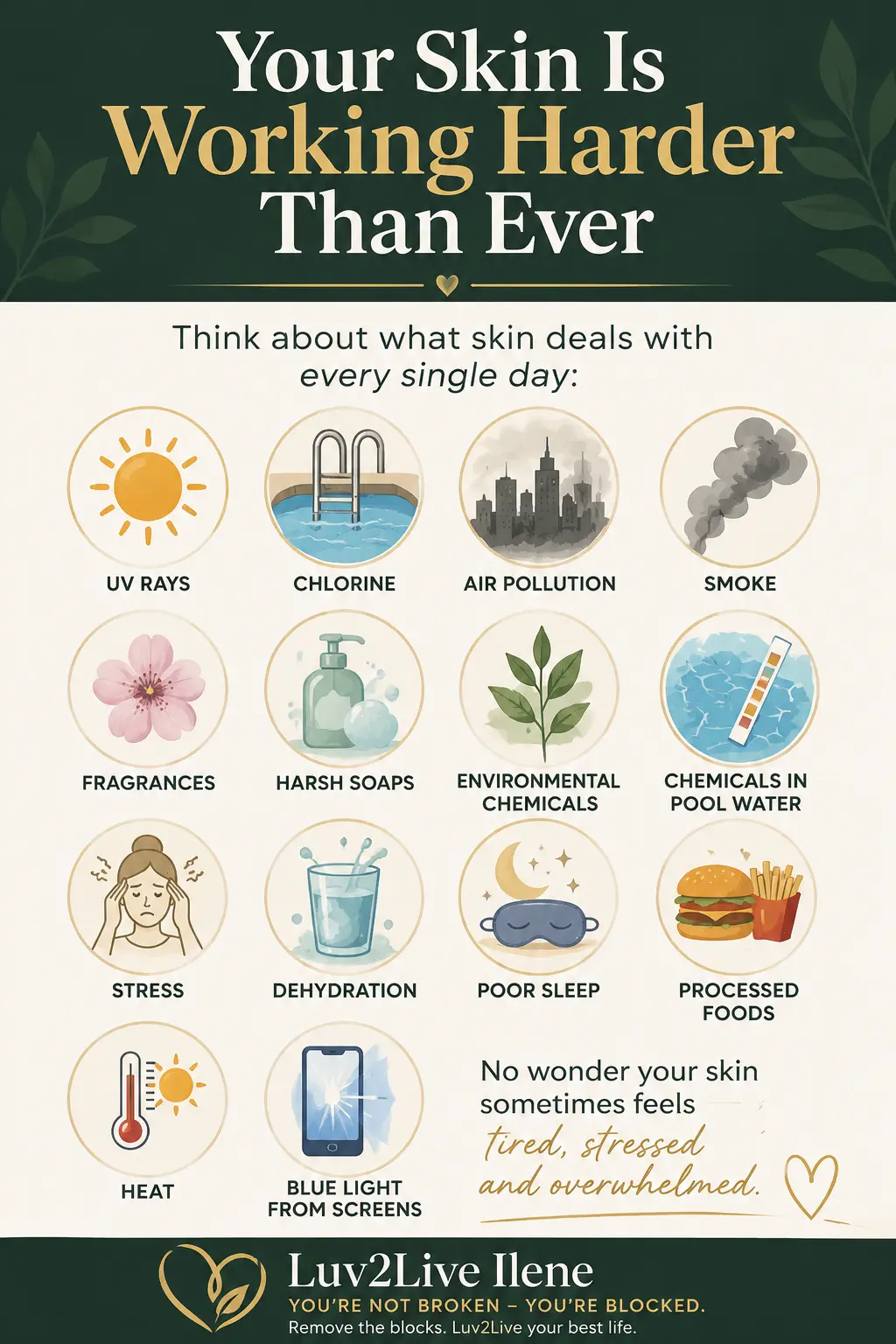
Your skin isn't simply "aging." It's adapting. And sometimes it's overloaded.
This is where the conversation around oxidative stress skin damage becomes important.
What Is Oxidative Stress in Skin?
Oxidative stress happens when free radicals overwhelm the body's natural protective systems.
Free radicals are unstable molecules created by things like UV rays, pollution, smoke, environmental toxins, stress, inflammation, and chemical exposure.
Over time, this stress can affect the appearance of skin by contributing to:
dryness
uneven tone
dullness
rough texture
visible irritation
loss of radiance
appearance of fine lines
The future of skin care may not only be about what you block. It may also be about what you support.
The Skin Barrier Conversation Nobody Is Having
Your skin barrier is your body's frontline defense system. Its job is to help retain moisture, reduce excessive dryness, support resilience, and protect against environmental stressors.
When the skin barrier becomes stressed, skin may appear:
dry
reactive
irritated
dull
flaky
uneven
This is one reason many people are rethinking aggressive products loaded with fragrances, alcohols, aerosols, and harsh ingredients. Sometimes the goal isn't stronger stripping — sometimes the goal isstronger support.
Sun Exposure Isn't the Only Stressor
Most people think only sunshine affects the skin. But environmental stress comes from multiple directions. Research now discusses the impact of air pollution, free radicals, oxidative stress, blue light exposure, environmental toxins, chronic inflammation, and dehydration.
Old Skin Care
"Cover it up."
Modern Conversation
"How do we help skin stay resilient?"
Why Some Families Are Re-Evaluating Their Skin Care Choices
Parents today are reading labels more carefully than ever. They're asking:
?What's being absorbed?
?What ingredients are we repeatedly applying?
?What happens when this mixes with sweat and pool water?
?Is this supportive to the skin barrier?
?Is it fragrance free?
?Is it designed for sensitive skin?
?What does long-term exposure look like?
And honestly — those are smart questions. Especially when children's skin is thinner and more sensitive than adult skin.
The Rise of Mineral-Based Skin Care
Unlike many chemical sunscreens that absorb UV rays, mineral sunscreens use ingredients like zinc oxide to create a physical barrier on the skin's surface.
Many families prefer mineral options because they are often:
less irritating fragrance free -reef friendly- simpler ingredient profiles supportive for sensitive skin
Consumers are becoming more intentional. And intentional consumers ask better questions.
The NRF2 Conversation Is Beginning to Enter Skin Care
Some newer skin-care technologies are exploring ways to support the body's own natural protective responses against oxidative stress.
One pathway often discussed is called NRF2— associated with the body's natural antioxidant response systems.
Several newer skin-care formulas now include botanical blends connected to this concept, including:
green tea
turmeric
milk thistle
broccoli sprout extracts
bacopa
black pepper extract
The focus is shifting toward supporting healthier-looking skin under stress— a very different philosophy than hiding damage after it appears.
Why Hydration Matters More Than Most People Realize
Hydrated skin is not just about appearance. Hydration affects how skin feels, responds, recovers, protects itself, and maintains resilience.
When skin becomes dehydrated, it may appear dull, tight, flaky, or stressed.
A smarter combination approach
mineral sun protection+
hydration support+
antioxidant-rich skin care
Not out of fear. Out of awareness.
A Smarter Skin Conversation
This blog is not about fear. It's about awareness. Because the truth is: most people simply were never taught to think about skin at the cellular level.
They were taught:
—avoid burning
—wear sunscreen
—buy lotion
Modern research adds:
+oxidative stress skin support
+environmental stress and skin health
+skin barrier support
+hydration
+ingredient awareness
+antioxidant support
And once people understand more… they usually begin making different choices naturally.
Related Reading
If this conversation opened your eyes, continue here:
Want the deeper educational guide?
Download: "What's Really Happening to Skin at the Cellular Level?"
Sources & References
TrueScience® product information discussing oxidative stress, environmental aggressors, skin hydration, and mineral sunscreen technology.

START HERE
EXPLORE
WORK WITH ME
SUPPORT

*Some links or codes on this page may earn me a commission if you purchase. I only share products I’ve chosen to feature.
Copyright 2026 Luv2Live Ilene